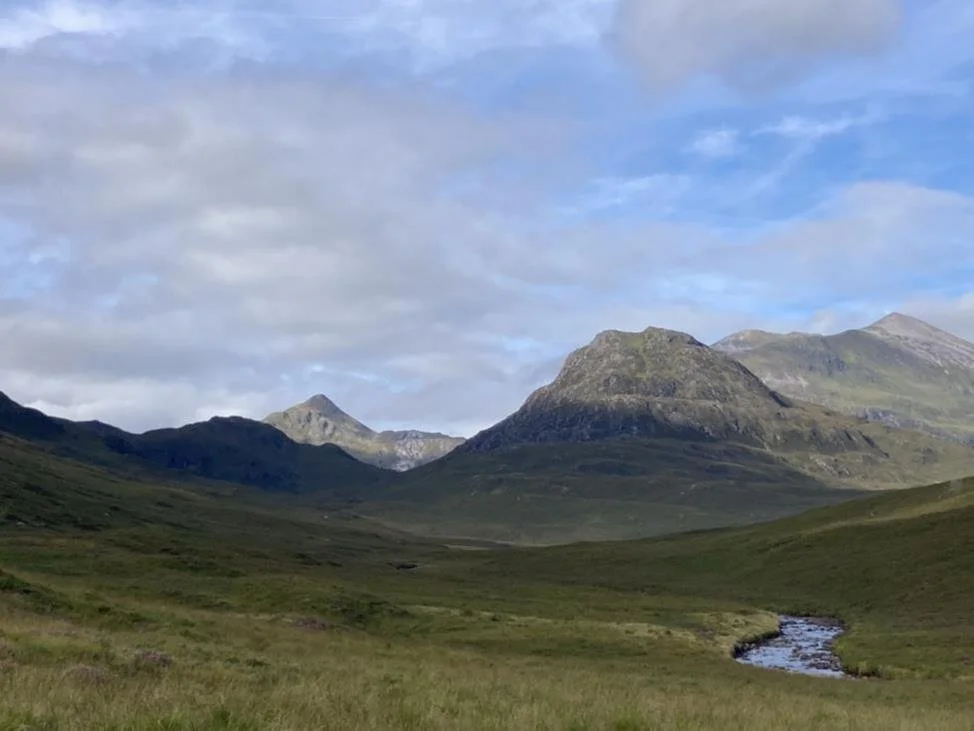
Phase 2 of the Mamore and Killiechonate Native Woodland regeneration project has started this week.
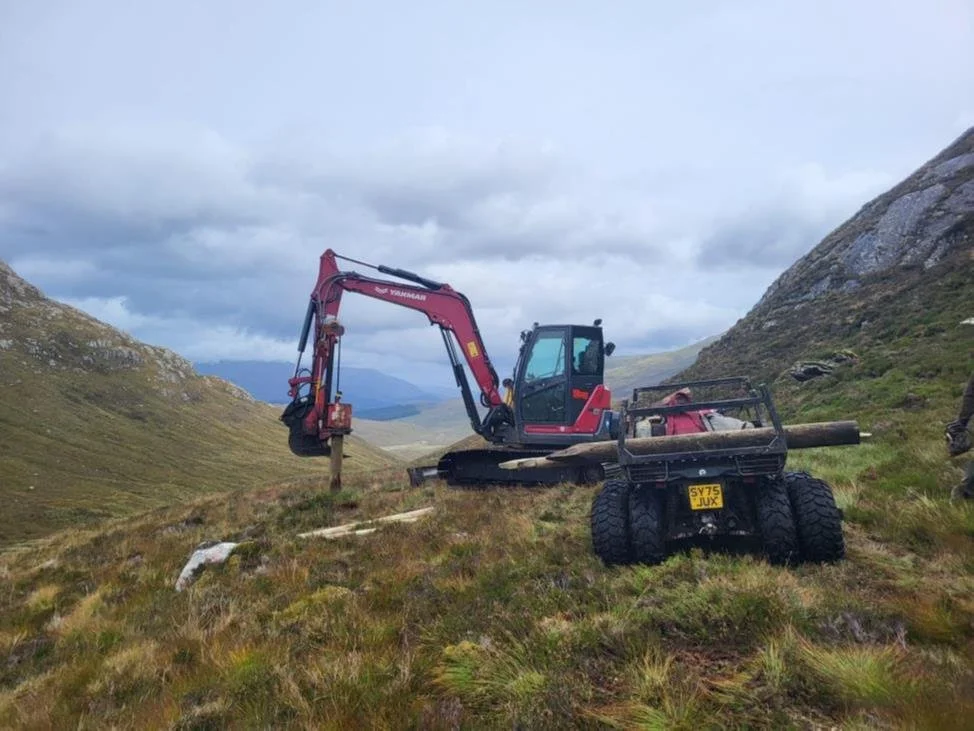
Phase 2 of the Mamore and Killiechonate Native Woodland regeneration project has started this week. Phase One is the on-going managed reduction of red deer numbers across the Estate, and this work continues this season, following on from last seasons very successful reduction managed by our Stalker teams, and in partnership with a contractor. The deer reduction and the woodland regeneration programme is predicated by the fact that we will not be installing any large deer fence enclosures , as a way to manage this project, which is unlike the majority of Estates in Scotland.
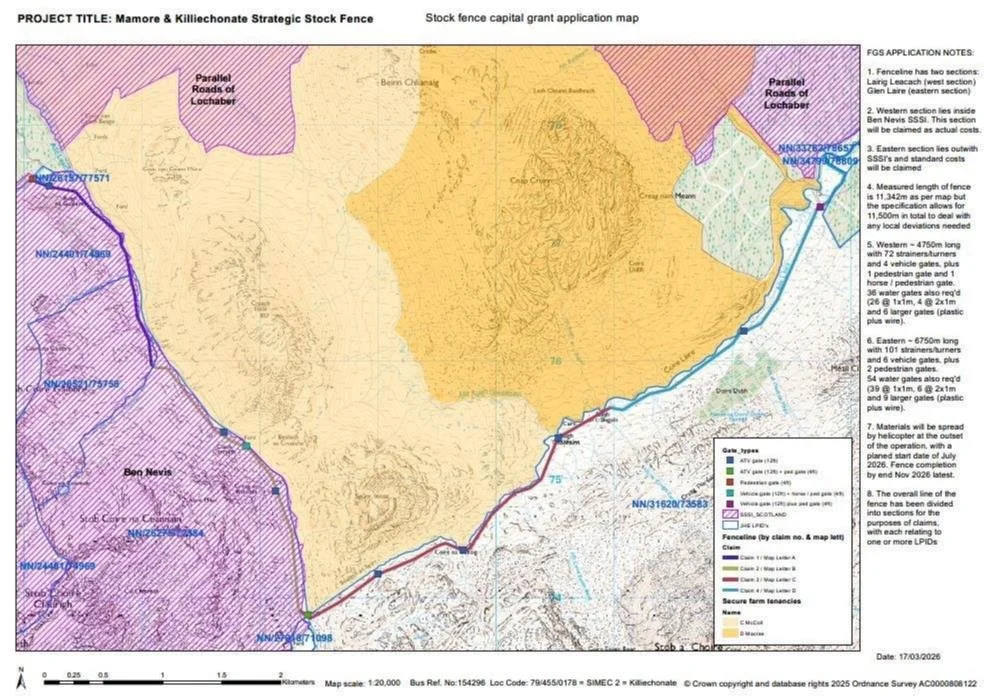
Part 2 of the project is the management of an additional herbivore, sheep. We need to manage sheep farming, so that the animals are out with the very protected areas of the Ben Nevis SSSI and SAC. To do this in collaboration with our local tenant farmers we have ceased our own in house agriculture and have offered our own in-by land , to our tenants. Our in-by land is located on lower more productive ground , and lies out with the Ben Nevis SSSI area, mostly focussed at Fersit and Inverlair. In order to keep the sheep out with the Ben Nevis SSSI , yet within the tenanted areas, we have commenced the construction of a stock fence.
Sheep will be removed from their seasonal grazings in late 2026, and the wider hills also gathered at that time to remove feral sheep. Sheep will remain on the estate, on the secure farm tenancies to the north as well as in several other areas of low-lying and securely stock fenced fields on the low ground. A new stock fence will be erected on the southern march of the secure farm tenancies to ensure stocked sheep cannot move south into the proposed regeneration zones.
The 11.5km strategic stock fence on the western and southern marches is designed to secure our agricultural tenancy areas on Killiechonate Estate, in order to ensure that sheep from the tenancies do not stray west or south into our landscape-scale regeneration project area.
Longer term our deer will be managed down to a summer density of ~ 1.5 per km2 across the area as a whole, to ensure conditions are compatible with widespread natural regeneration of native trees (and ideally montane scrub species also). Collaboration with neighbours and tenants is an essential part of this process, including sharing cull returns and participating in joint counts, and the provision of in-by agricultural land to ensure the future of sheep farming in the area.
Open public access will be maintained across the entire area, all year round, other than where planned events need to have areas ringfenced temporarily for safety and related legal reasons (e.g. car rallies, trials bike or downhill MTB events)
The proposed management will benefit a huge range of plant and animal species, as well as dramatically increasing the extent of semi-natural woodland cover and stand structural, species and age class diversity.
We chose this suite of objectives because if we deliver them all successfully, the condition of the designated site as well as the wider environment will improve dramatically.
All works undertaken with comply with the UKFS and current Forestry Guidance, as well as the Scottish Outdoor Access Code. Revised wildfire management plans are being developed also, in line with Forestry Wildfire Guidance.