
A positive update from Pat Batty of the Dragonfly Society (BDS)
Breeding in Scotland are three rare bog species White-faced darter [Endangered], Azure Hawker [Vulnerable}, Northern Emerald [Near threatened] though in the recent review of the red list BDS is recommending all three be classed as Endangered in the light of recent analysis. In Britain, the latter two only found in Scotland and are at the edge of their range with Azure Hawker being lost from its southern sites in SW Scotland most likely due to climate change.
In recent years there have been extended periods of dry weather and many of the breeding pools have become dried up. The length and frequency of droughts is expected to increase (NatureScot research report No. 1228) this is likely to have a major effect on pools and peatlands throughout Scotland.
This will become a problem for the long-term survival of dragonfly species. Their larvae take between 2-4 years to develop, and it is not known how long larvae can survive these conditions, if at all, particularly the smaller larvae.
Recent visit to Jahama restored site at Mamore The area had been restored in March 2026 as part of the British Dragonfly Society Dragonflies on the Bog project funded by the Nature Restoration fund, and in partnership with JAHAMA Highland Estates. The aim was to create and maintain pools to provide suitable habitat for rare dragonflies. The restoration of the project site is the culmination of two to three years of engagement by Cameron Loudon, Blair and I working with Pat and her team. When coupled with the restored pools at Corrour, and our proposed future restoration of peatland sites at Tom an Eite and to the North of the Blackwater, this area will be one of Europe’s largest dragonfly restoration projects.
Sightings
Confirmed evidence of Northern Emerald emerging and finding larvae in several places at Mamore restored site.
White faced darter was also there , having never been recorded in the general area before, and listed as endangered.
These rare species were in both east and west areas of our restoration site, at the south end of Loch Eilde Mhor.
Common Hawker and Four spotted chaser were also recorded.
The need to ensure the mountain wetland areas remain wet is a benefit to the long-term water resilience of Alvance, and a huge benefit to the environment. This project is a successful example of finding that sweet spot whereby large-scale industry can provide commercial, environmental and community benefit.
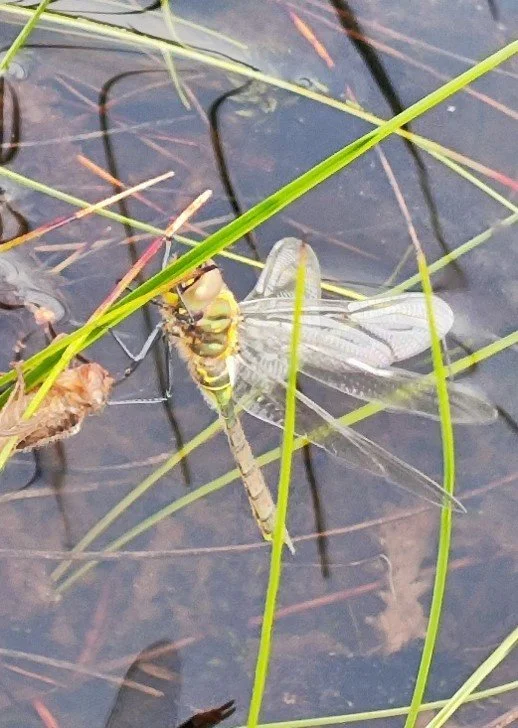
Female Northern Emerald emerging (BDS)
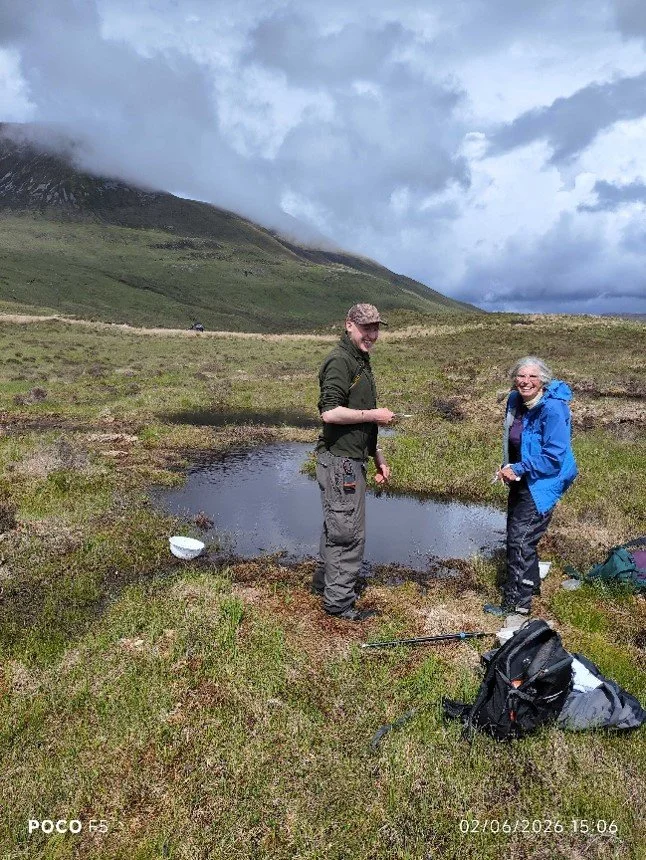
Trainee Stalker Blair Nicholson hosting recent site visit (BDS)
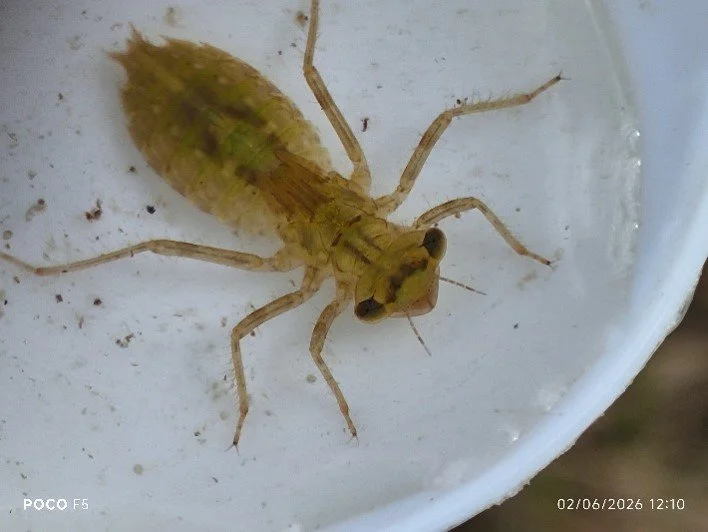
White faced darter larvae (BDS) – An endangered species previously unrecorded at the site
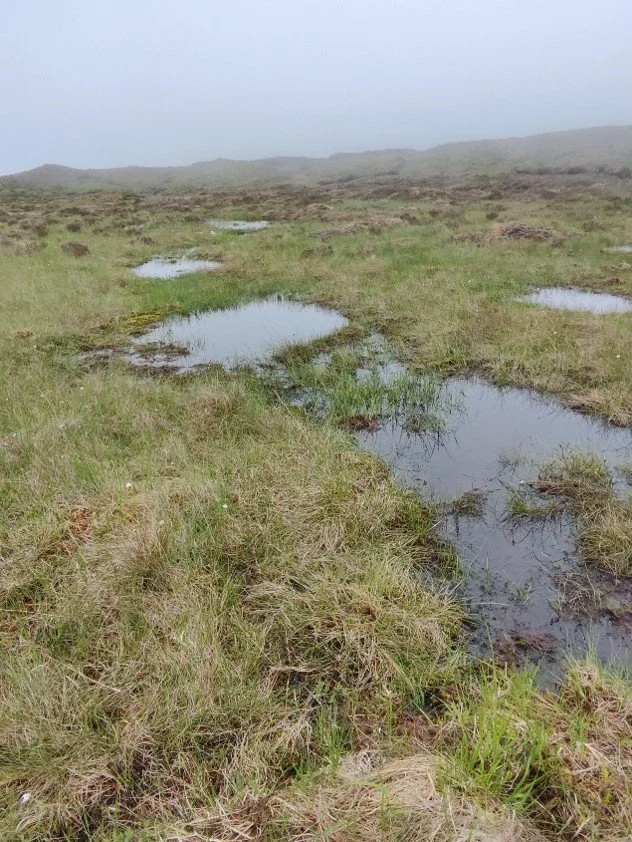
Restored wet pools site at Loch Eilde Mhor, Mamore Estate (BDS)